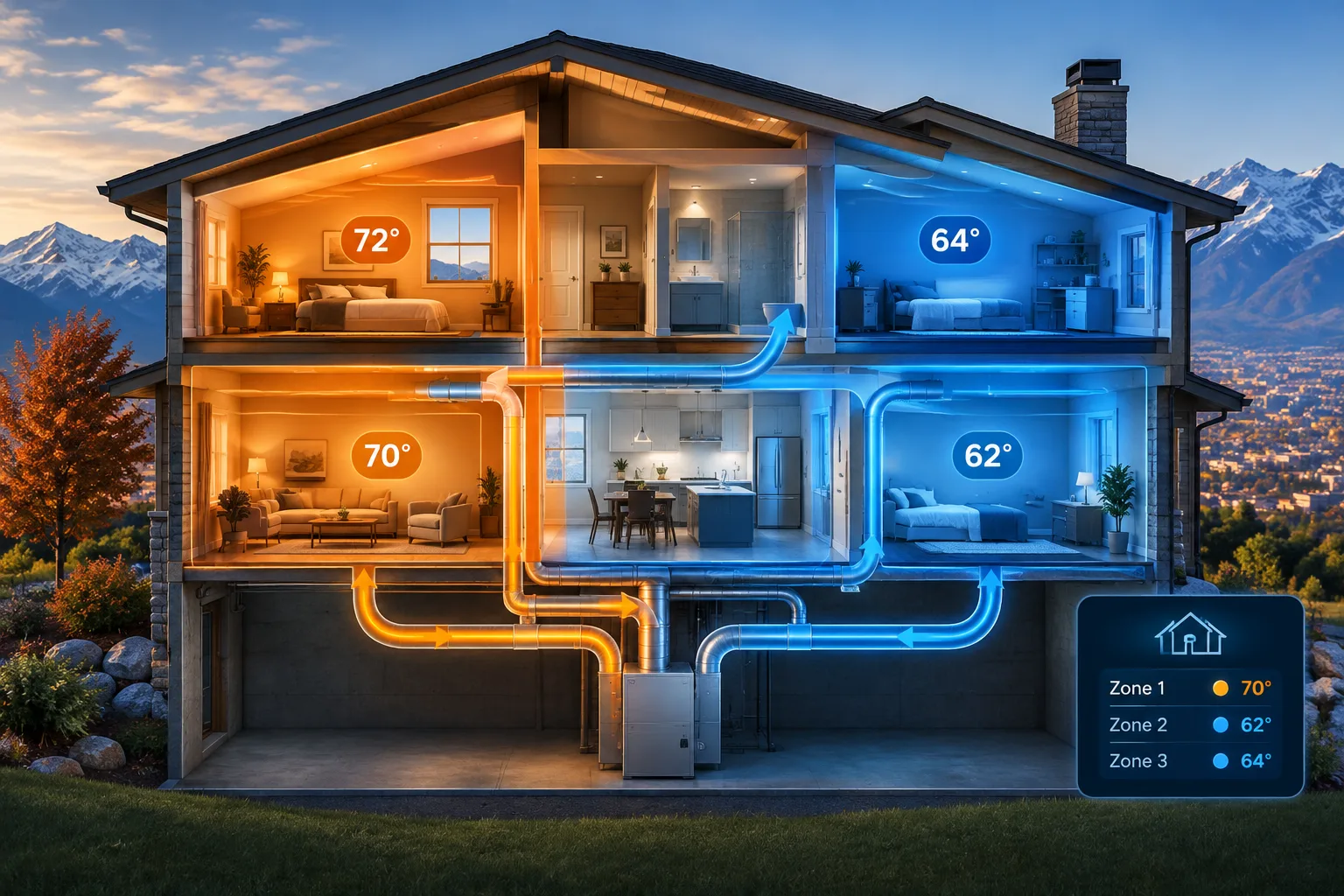
Have you ever noticed that some rooms in your Utah home feel colder than others, even when your heating system is running? This uneven heating can be frustrating and uncomfortable, especially during the chilly winter months. There are several reasons for this issue, ranging from your home's design to the efficiency of your heating system. Understanding these factors can help you make informed decisions about how to improve your home's comfort. In this article, we'll explore the practical causes of cold rooms in your home and how home zoning systems may provide a solution.
Understanding the Basics of Home Heating
Home heating systems are designed to maintain a comfortable temperature throughout your home. However, the efficiency of these systems can be influenced by various factors. In many homes, heating systems operate on a single thermostat, meaning the heat is distributed evenly based on that one location. This can lead to situations where rooms farther away from the thermostat remain significantly cooler. Factors such as room size, window exposure, and insulation quality are all important to consider when assessing your heating performance.
Common Causes of Cold Rooms in Utah Homes
One of the most frequent culprits behind cold rooms is poor airflow. If your vents are blocked by furniture or if your ductwork is poorly designed or damaged, the heated air won't reach every corner of your home effectively. Additionally, homes with multiple levels often experience temperature disparities. The upper floors may be warmer while the lower levels remain chilly, predominantly due to the basic principles of heat rising. This can create discomfort and lead homeowners to raise their thermostats unnecessarily, driving up energy bills.
The Role of Insulation and Airflow
Insulation plays a crucial role in maintaining your home's temperature. Inadequate insulation can allow heat to escape, making certain areas feel colder. Rooms with large windows, high ceilings, or poor insulation in walls and roofs can suffer significantly in terms of heat retention. Common solutions include adding insulation to walls and attics or using insulated window treatments. Furthermore, ensuring that your system is correctly sized for your home and that it's checked regularly for proper airflow is key to preventing cold spots in the home.
How Home Zoning Systems Work
Home zoning systems provide a tailored approach to heating, allowing you to control temperatures in individual rooms or areas of your home effectively. These systems utilize dampers within your ductwork to redirect airflow based on your specific needs. For instance, if a particular room stays cold, you can simply adjust the zone controls to increase heat in that area without impacting the overall temperature of your home. This not only improves comfort but can be energy-efficient, saving you money in the long run.
Practical Solutions to Uneven Heating
To address uneven heating in your Utah home, consider consulting with an HVAC professional. A qualified technician can assess your current system, inspect your insulation, and suggest improvements tailored to your specific needs. Additionally, upgrading to a home zoning system can significantly enhance your overall comfort. With customization options, you can achieve a balanced environment throughout your living space. For Utah homeowners, CoolDeals Heating & Air specializes in evaluating and implementing effective heating solutions, ensuring you stay warm even in the coldest months.