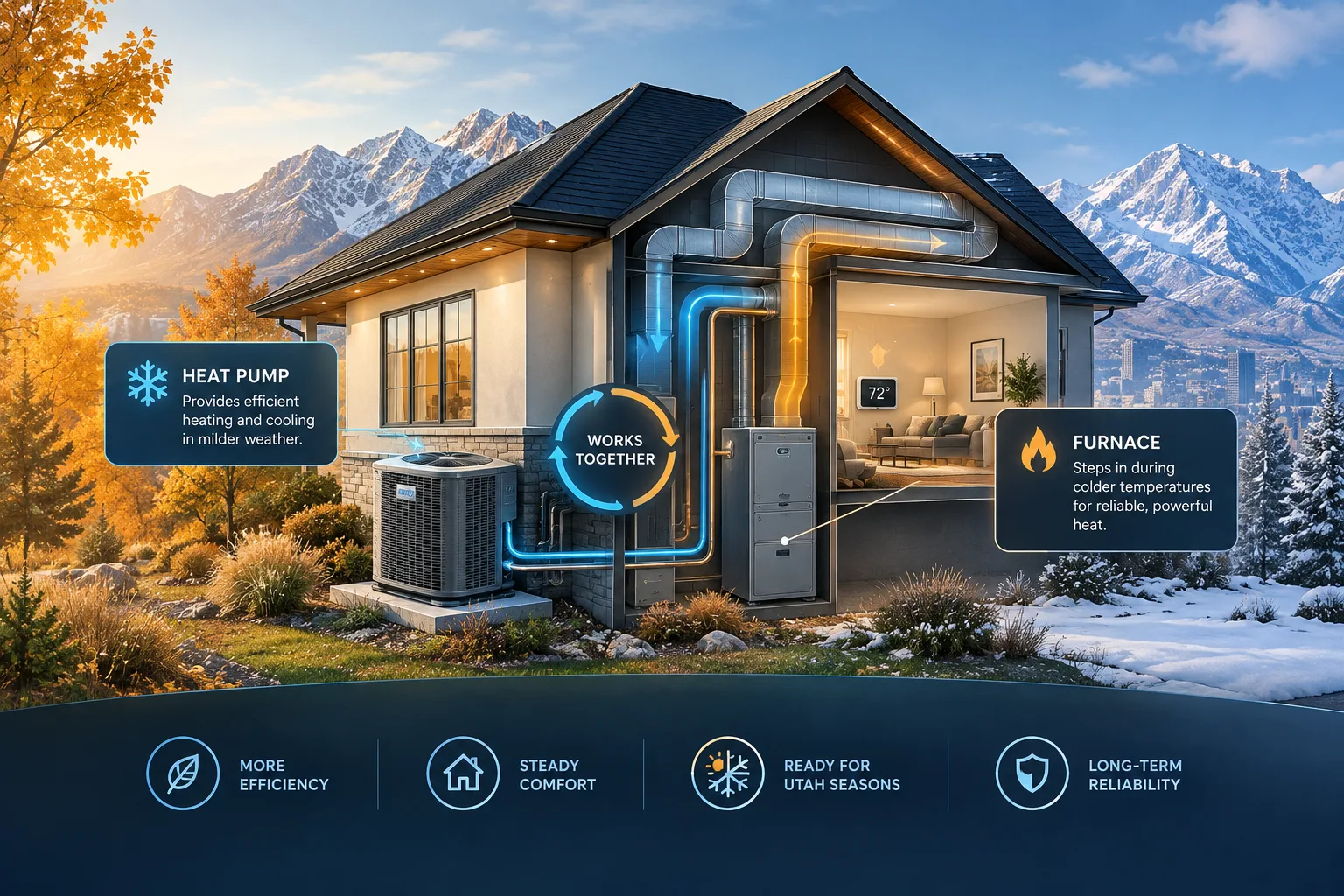
For homeowners in Utah, the combination of a heat pump and a gas furnace—known as a dual-fuel system—can be an optimal solution for achieving year-round comfort. This hybrid approach offers significant flexibility, efficiency, and responsiveness tailored to Utah's unique climate challenges and seasonal changes. Let's explore when a dual-fuel system makes sense and how it can meet the heating and cooling needs of your home.
What is a Dual-Fuel HVAC System?
A dual-fuel HVAC system integrates both a heat pump and a gas furnace to provide versatile heating and cooling options. In warmer months, the heat pump efficiently cools your home. Conversely, during cold winter months, the gas furnace kicks in for additional heating when outdoor temperatures drop too low for optimal heat pump operation. This combination allows homeowners to harness the benefits of both technologies, ensuring consistent indoor comfort across seasons.
Benefits of a Dual-Fuel Approach
One of the biggest advantages of dual-fuel systems is their energy efficiency. The heat pump uses electricity to move heat, making it more efficient in moderate climates, while the gas furnace provides powerful heating when temperatures plummet. This flexibility can lead to lower energy bills and enhanced comfort, as homeowners can rely on the most efficient system based on current conditions. Additionally, it reduces wear on equipment and may extend the lifespan of both heating sources.
Cost Considerations and Efficiency
While the initial installation cost of a dual-fuel system may be higher than a traditional setup, the long-term savings through lowered energy bills can outweigh this upfront investment. Depending on local energy rates and weather conditions, homeowners can potentially save significant amounts by optimizing their energy use. By installing such a system, you might also qualify for various rebates on energy-efficient equipment, making your investment even more financially feasible.
When to Consider a Dual-Fuel System
Choosing to implement a dual-fuel system may depend on a few factors, including your home’s existing ductwork, local climate, and personal heating and cooling needs. Homes experiencing extreme temperature variations might benefit significantly from this combination. If you’re currently facing high energy costs or are unhappy with the comfort level of your heating and cooling situation, it may be time to look into this efficient and flexible solution. Consulting with a local HVAC expert can help you evaluate the suitability of a dual-fuel system for your home.
Conclusion: Evaluating Your Options
Deciding on a dual-fuel system offers Utah homeowners an effective way to meet their changing heating and cooling demands. The combination of a heat pump and gas furnace can provide both efficiency and comfort, especially in regions with diverse seasonal weather. To make an informed decision, consider your specific needs, consult with an HVAC professional, and explore potential rebates and financing options available for these efficient systems. Making the right choice today can enhance your home's comfort while also contributing positively to your energy bills.